Our climate is changing, and our weather is becoming warmer, wetter and wilder. Heat events are becoming more frequent, longer and hotter in Burlington. While poor air quality events can happen at any time, they often occur from May to September because air pollution concentrations can be higher in hotter weather. In addition, wildfire season in Canada is expected to increase in severity and duration, which produces poor air quality due to wildfire smoke.
Air quality affects everyone’s health. By taking the steps to prepare for air quality events, we can make sure everyone has a safe and fun summer.
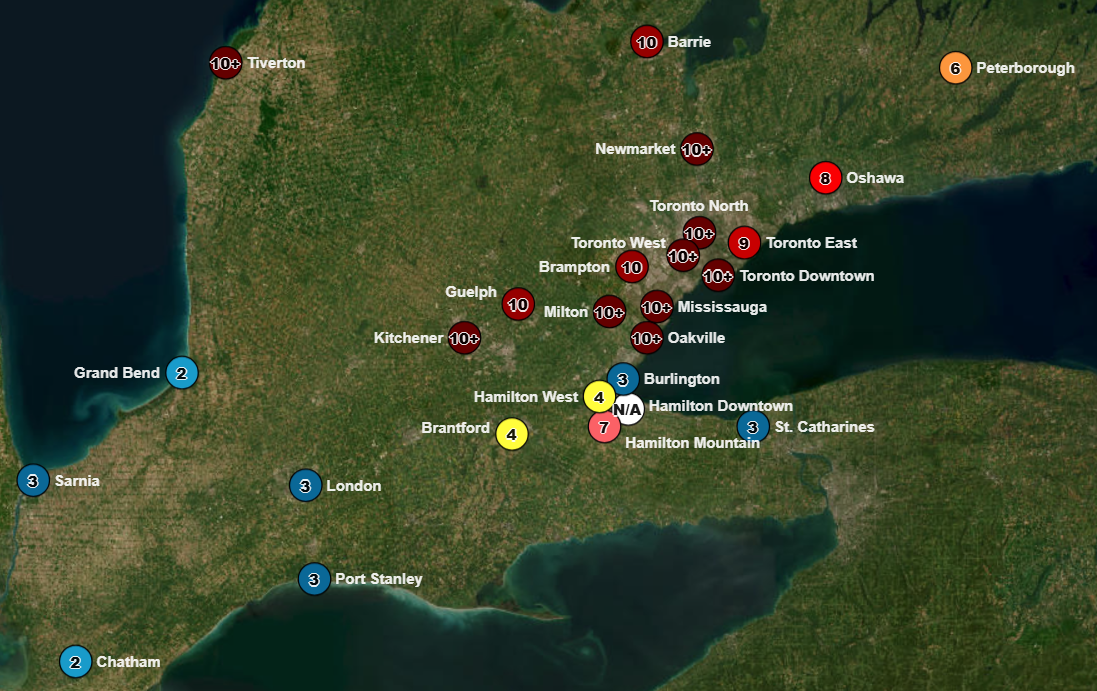
Air Quality Health Index
The Air Quality Health Index (AQHI) is a health risk communication tool that indicates the level of health risk associated with short-term exposures to air pollution in your area. It is measured on a scale of 1 to 10+, where the lower the number, the lower the risk.
The AQHI is calculated based on the relative risks of a combination of three common air pollutants that are known to harm human health. These pollutants include:
- Ground-Level Ozone (O3)
- Fine Particulate Matter (PM2.5)
- Nitrogen Dioxide (NO2)
As people respond differently to air pollution, the AQHI provides a simple scale on how to protect health during air quality levels associated with low, moderate, high, and very high health risks.
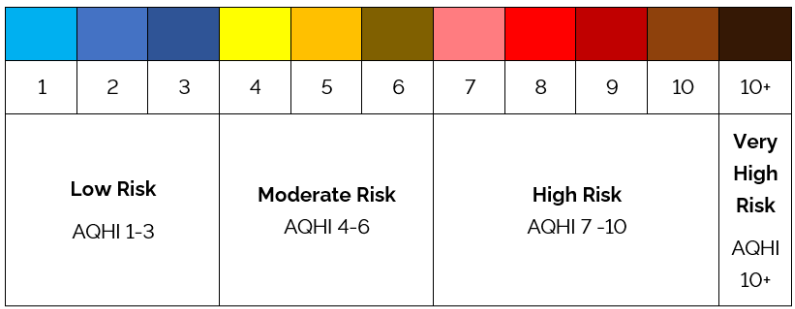
The AQHI also includes health messages based on each risk category for both the general population and the ‘at-risk’ population. This messaging is intended to provide suggestions on how individuals may choose to adjust their activity levels depending on individual health risk from air pollution.
In Ontario, local AQHI readings can be found at the Ontario Ministry of the Environment, Conservation and Parks’ Air Quality Ontario website that includes current readings and maximum forecast values for today, tonight, and tomorrow
Air Quality Alert Notifications
Environment and Climate Change Canada (ECCC), and the Ontario Ministry of the Environment, Conservation and Parks (MECP), jointly issue two types of notifications:
- Special Air Quality Statement: issued when the Air Quality Health Index is forecast to reach the high-risk category (7-10). The purpose is to be precautionary and vigilant of your health.
- Air Quality Advisory: issued when the Air Quality Health Index is forecast to reach, or has reached, the very high-risk category (10+) due to wildfire smoke.
Air quality readings are posted on MECP and ECCC’s air quality websites.
MECP provides a subscription service that allows users to sign up to receive email notifications when a Special Air Quality Statement or Air Quality Advisory has been issued for their chosen forecast region(s).

Preparing for Air Quality Events
Protecting you and your family for an air quality event starts before the notification is issued.
- Sign up to receive notifications from the WeatherCAN app or the MECP email notification system.
- Take measures to protect indoor air such as sealing windows, using an air purifier, and replacing your furnace/central air HEPA filters every three months to limit outdoor pollutants from entering the home.
- Know your risk. Seniors and people with lung and cardiovascular diseases can be particularly sensitive to air pollution. Children, including teenagers, are at higher risk from outdoor air pollution because they are often active when outdoors.
- At-risk individuals should maintain a week-long surplus of medications should they be unable to reach a pharmacy or primary care provider.
- Know the signs and symptoms of exposure to air pollutants including wildfire smoke.
Signs and Symptoms of Exposure to Air Pollutants
Exposure to air pollutants like wildfire smoke commonly results in mild symptoms such as:
- eye irritation
- throat irritation
- cough
- runny nose
- headaches
More severe symptoms include:
- dizziness
- chest pains
- difficulty breathing
- wheezing
- heart palpitations
During an Air Quality Event
During an air quality event, follow public health recommendations and:
- Pay attention to the Air Quality Health Index (AQHI) and air quality statements.
- Limit outdoor activity and strenuous physical activities. If you feel unwell or have difficulty breathing, stop altogether.
- Set your HVAC system to ‘recirculate’ to increase filtration and reduce inflow of outside air.
- Stay indoors and keep windows and doors closed. If it is too warm, turn on the air conditioning if possible. If you do not have air conditioning and it is too warm to stay inside with the windows closed, seek out local cooling spaces, such as your local community centre, library or mall.
When there are impacts to outdoor pools, sport fields and/or City facilities due to air quality, the City of Burlington will provide an update on its Facility, Sports Field and Pool Closures page.
Learn more by reading the Government of Ontario’s Wildfire Smoke and Air Quality Health Reference Document and Halton Region’s Air Quality in Halton highlight report.
Connection to Burlington’s Climate Plans
Did you know that the City of Burlington has three climate plans currently being implemented which address:
- Adapting for our warmer, wetter and wilder weather (Climate Resilient Burlington)
- Reducing emissions from the community with a goal to be net carbon neutral by 2050 (Burlington Climate Plan)
- Reducing emissions from our operations with a goal to be net carbon neutral by 2040 (Corporate Energy and Emissions Management Plan: 2024-2029)
For more information about Burlington’s climate plans, please visit burlington.ca/climatechange.
Take Action Burlington. By being aware of and preparing for the health impacts of our changing climate, we can keep our friends, family and community safe this summer. Collectively we can make a difference.

