
In 2022, City Council approved Burlington’s first plan related to climate adaptation called Climate Resilient Burlington (CRB): A Plan for Adapting to Our Warmer, Wetter and Wilder Weather. The CRB plan includes a 10-year action plan with 32 actions identified under five themes to manage the highest risks to the City associated with our changing climate.
Climate adaptation is only one half of our climate work. The City also has two plans related to climate mitigation, or reducing greenhouse gas emissions that contribute to climate change, including:
- The Corporate Energy and Emissions Management Plan (first approved in 2014 and updated in 2019 and 2024) with a target to achieve net carbon neutrality for City operations by 2040; and
- The Climate Action Plan (approved in 2020) with a community target for net carbon neutrality by 2050. An updated plan will be presented to City Council later this year.
Why is Climate Adaptation Important?
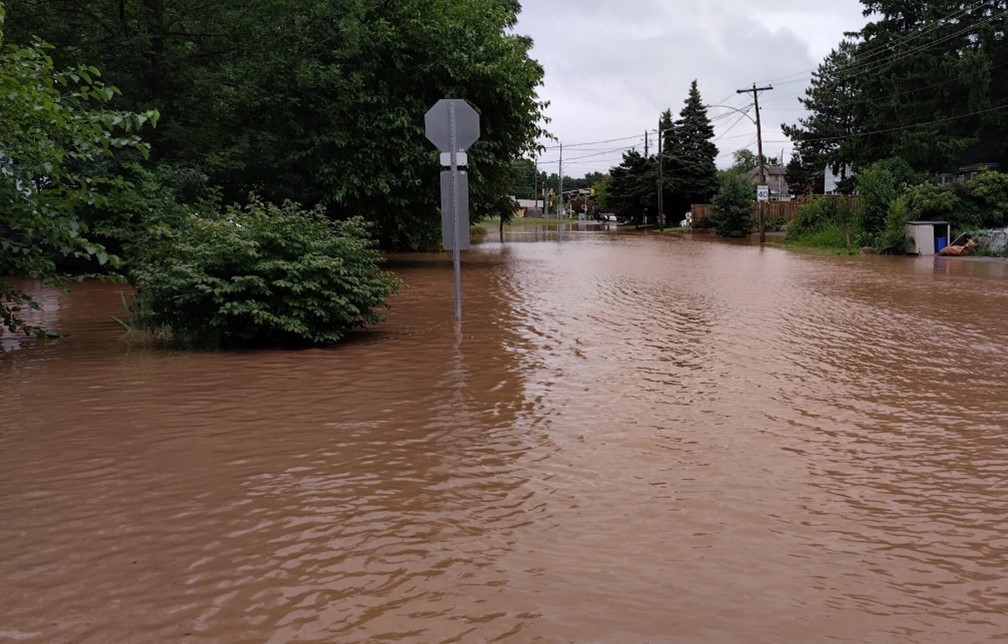
Our climate is changing. We are experiencing warmer, wetter and wilder weather. Severe weather events and costs are increasing. In 2024, the Insurance Bureau of Canada (IBC) stated that insured loss reached a record of over $8.5 billion in Canada, most of which was due to four summer events. And, for every dollar in insured losses, there are three to four dollars in uninsured losses incurred by governments, businesses, and individuals according to a report prepared for the IBC and Intact Centre of Climate Adaptation.
Burlington is not immune to extreme weather events. In recent years, the City has experienced the 2013 ice storm, significant flooding in 2014 and 2024, along with other events such as extreme heat, high wind, and record high Lake Ontario levels in 2017 and 2019.
2024 Highlights
City staff report annually on the CRB plan’s progress and post the updates at burlington.ca/climatechange. The following are some initiatives highlighted in the third annual update report for the 2024 calendar year:
Infrastructure Design and Lifecycle Management
The Advancing Natural Asset Management Practices in the Grindstone Creek Watershed study was completed to better understand barriers and best practices to advance natural asset management in the watershed. The study was led by Conservation Halton (CH) with interested municipal partners including the City of Burlington.
In response to a 2022 City Council request, Burlington Enterprises Corporation (BEC) presented the Burlington Distribution Sustainability Plan in July 2024 highlighting how BEC is preparing its distribution system and operations for the future, identifying new infrastructure needs, adopting climate adaptation measures to improve resilience, and supporting community climate action.
Flood Management
Shoreline reconstruction was completed at Appleby Place Window-to-the-Lake.
A Flood Hazard Impacts and Mitigation Assessment was completed to evaluate flood hazards, in and around the Burlington GO Major Transit Station Area (MTSA), the downtown core, and along the Hager-Rambo Diversion Channel, and recommended infrastructure improvements and preliminary costs to mitigate flooding.
Four stormwater/flood studies and six creek rehabilitation projects were designed and constructed to address erosion concerns which could become a greater concern with increased heavy precipitation events.
The Watershed-Based Resource Management Strategy (Watershed Strategy) was approved by CH Board of Directors. This included the Watershed Climate Change Vulnerability and Risk Assessment and a Watershed Climate Resiliency Plan to help reduce the negative effect of climate change on local communities. City staff provided input throughout the process.
Service Disruption
Additional funding was provided to Forestry for enhanced grid pruning. Properly pruned trees are better able to withstand extreme wind events resulting in less calls for fallen trees post storm.
Burlington Hydro led a tree removal initiative along the Centennial Trail due to several branches falling on lines and causing outages during extreme weather events. Replanting with hydro-friendly tree and shrub species will take place in 2025.
The City has three Emergency Operations Centre locations, reception centres and an evacuation centre.
The City has 15 generators to provide back-up power for facilities’ critical infrastructure and ensure business continuity.
Tree Management
In April 2024, City Council approved the Urban Forest Master Plan replacing the existing plan first approved in 2010. The first Woodland Management Strategy was also approved. The City manages over 85,000 trees within its parks and right of way and is responsible for 285 hectares of woodlands. A total of 46 actions were identified in the 20-year plan including a couple of actions from the Climate Resilient Burlington plan.
Natural Area Management

Several trees and seedlings were planted by Forestry staff and with community partners in 2024. Trees help reduce runoff and filter water, provide cooling helping to reduce the urban heat island effect, etc.
Greening the Crosstown Trail, a pilot project to establish a meadow habitat along 7.5 hectares of the trail, was approved. This will be a multi-year project.
Planting and invasive removal species projects; stream, riparian and land restoration projects; landowner grants which included four rain gardens completed by CH staff in Burlington.
Burlington’s Bird Friendly City designation was renewed in 2024; a dedicated page was added to the City’s website; educational decals, posters and information were posted on TV screens, windows and on bulletin boards explaining the bird friendly dots on windows at Mountainside Community Centre and City View Pavilion.
Annual road closure for the mating passage of the endangered Jefferson salamanders.
BurlingtonGreen carried out the following activities:
- Continued dune restoration services at Burlington Beach with a contractor via the transplant of 1,000 native grass plants
- Provided biodiversity-focused educational programming (pollinator teaching garden, bird-friendly window demonstration at the Pump House, monarch butterfly display, hands-on seed ball activities, guided bird walk, local birding webinar, invasive plant removal workshops, pollinator see packets giveaways, native plant sale, etc.)
- Eight-month long educational shoreline litter and microplastics clean-ups
Extreme Heat and Health
Community Development Burlington presented City staff with a Burlington Cooling Centre report highlighting issues around awareness and access to the City’s cooling centres.
A Climate Change and Health in Halton Region report was released by Halton Region highlighting seven key climate-related health impact categories of concern including extreme heat. Recommended actions included how to stay cool and prevent heat-related illness, and a note about accessing municipal cooling centres.
Community Education and Resilience

Bylaw 07-2024 Emergency and Continuity Management Program was approved by City Council providing a comprehensive framework for managing large-scale emergencies and disasters and ensuring the continuity of essential services.
Existing flood prevention programs were promoted on the City’s website and on the Take Action Burlington blog. Temporary programs were introduced to help residents with the impacts of the July 2024 flood including the Burlington Flood Recovery Grant and Building Permit/Zoning Certificate Fee Flood Relief Program.
Agriculture
Four community garden plots were added in two existing gardens. Community gardens help increase resilience and decrease our dependency on food imports.
International climate reporting

The City of Burlington also reports annually through the Global Covenant of Mayors (GCoM) and the Carbon Disclosure Project (CDP). The City received all mitigation and adaptation badges through GCoM in 2022 and 2023 respectively. In May 2025, the Burlington was recognized on CDP’s 2024 A List of Climate Leadership.
Take Action Burlington! Our climate is changing. Let’s work together to manage the risks associated with our changing climate. Collectively we can make a difference.
 Take Action Burlington