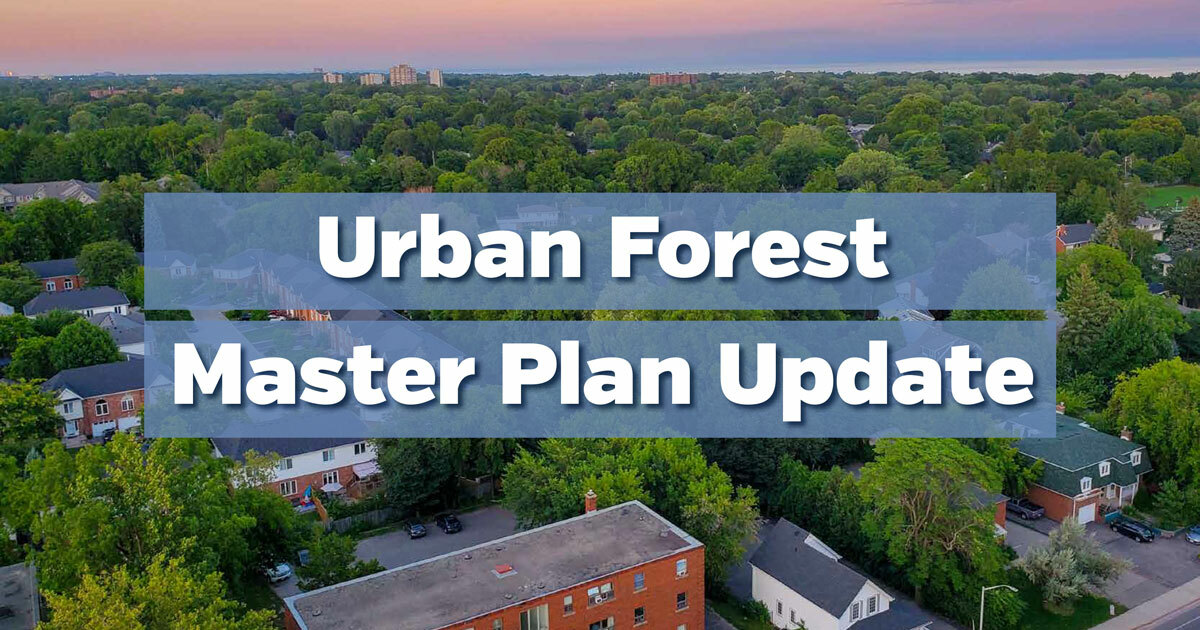
This week, Burlington City Council approved the Urban Forest Master Plan and Woodland Management Strategy. Both will serve as guiding documents for protecting and improving Burlington’s tree canopy over the next 20 years.
The City’s Urban Forest Master Plan recognizes the value trees provide to the community. In Burlington’s 2021 Asset Management Plan, the City’s tree inventory was valued at nearly $300 million.
There are five focus areas of the Urban Forest Master Plan and Woodland Management Strategy to help the City work collaboratively with partners and the community to protect and manage Burlington’s urban forest:
Maximizing the life expectancy of trees
This includes expanding program capacities, adapting formal maintenance standards, and improving the City’s process for monitoring and reporting. Trees are most expensive to maintain when they are first planted as well as later in life when their health begins to decline. Keeping mature trees healthy for as long as possible provides the greatest return on investment.
Increasing canopy cover on both public and private land including woodlands
This will be done through formal planting agreements with partners, issuing community tree planting grants, and through participating in provincial and federal grant opportunities.
Developing best management practices to manage climate change and invasive pests
This will be done through the creation of a city-wide biodiversity strategy, and other tactics. It cost $10 million to manage the invasive Emerald Ash Borer. By proactively increasing biodiversity, the City can mitigate risk and decrease the impact and costs associated with invasive pests.
Expanding community engagement opportunities
The City recognizes that meeting the goals set out in the Urban Forest Master Plan will be a shared responsibility. The City has identified an opportunity to establish a Community Tree Board with representatives from various wards, members of the Indigenous community, home building associations, environmental NGO’s, conservation authorities and more.
Improving data analytics
By issuing a State of the Urban Forest Report every five years, the City can measure maintenance activities and adapt to changing climate challenges. The last State of the Urban Forest Report was published in 2022.
City staff identified that the projected cost to implement the 47 action items identified in the Urban Forest Master Plan would cost approximately $300,000 a year over the next 10 years. Funding these action items will be requested and managed through the City’s annual budget process.
For more information
To read through the Urban Forest Master Plan, visit: getinvolvedburlington.ca/ufmp
To learn more about opportunities to get involved in forestry related projects, visit and subscribe to: getinvolvedburlington.ca/urban-forestry
 Take Action Burlington