At the beginning of the 2025, we announced that the City’s Climate Action Plan is getting an update and asked for your feedback on the proposed priorities for the updated plan. Since then, staff have been hard at work developing the updated plan and are happy to announce it was approved by Council in March 2026.
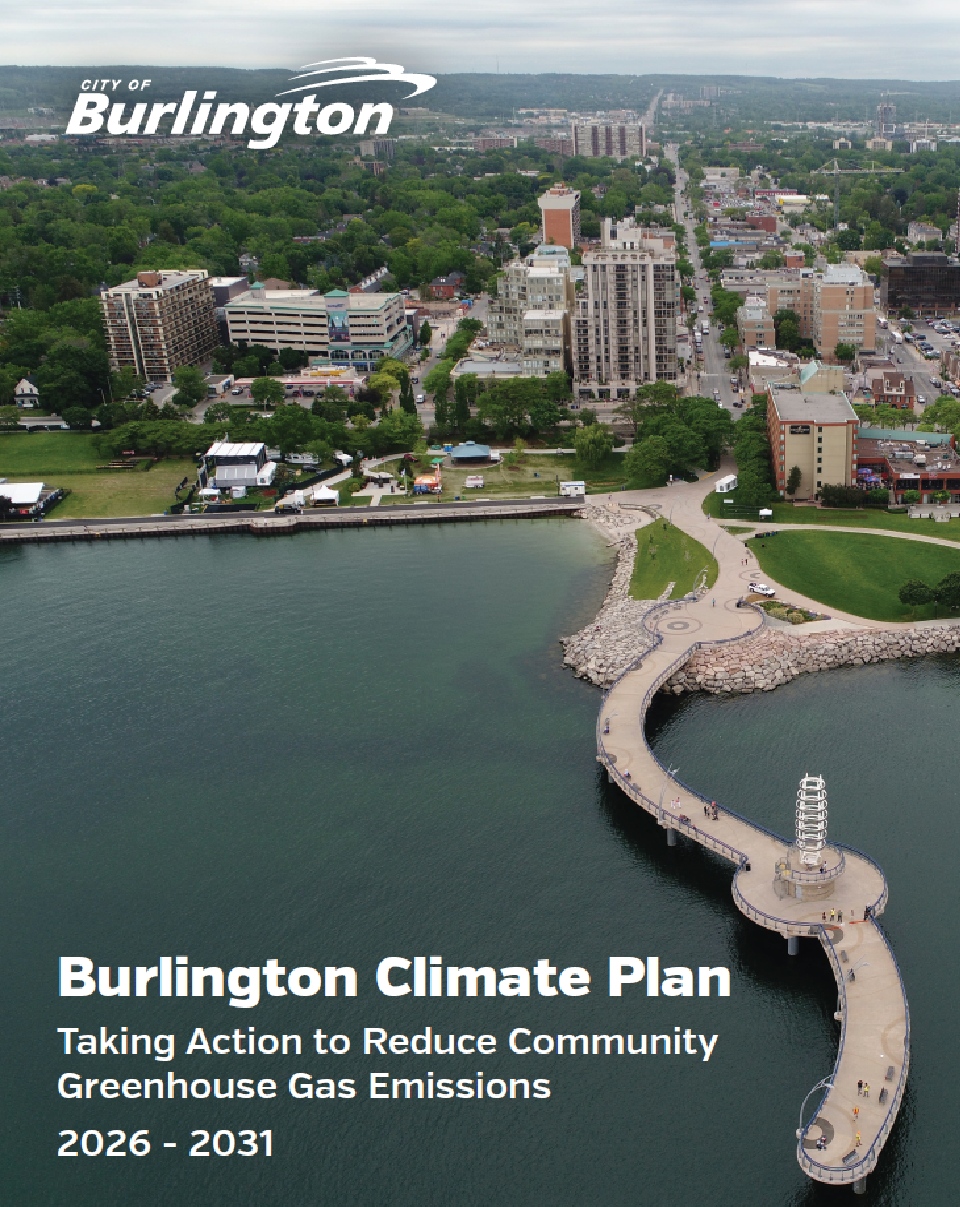
The Burlington Climate Plan represents a continuation of the 2020 Climate Action Plan, with updated actions recommended for 2026 to 2031.
Climate Action Plan (2020 – 2025)
The 2020 Climate Action Plan focused on community wide initiatives that that reduced our use of fossil fuels and resulting greenhouse gas emissions and provided a framework to achieve the target of becoming a net carbon neutral community by 2050. The plan was made of seven program areas including:
- Low Carbon New Buildings
- Deep Energy Retrofits for Existing Buildings
- Renewable Energy
- Electric Mobility and Equipment
- Integrated Mobility
- Waste Reduction
- Industry Innovation
Progress reports on the implementation of the seven program areas were provided to City Council each year from 2021 to 2025. A commitment was made to review and update the plan’s actions every five years.
The 2020 Climate Action Plan was based on modelling using local emissions, buildings, demographic and growth projections data to develop a strategy to focus the City’s limited resources to work toward achieving the target to be a net carbon neutral community by 2050.
Burlington Climate Plan (2026 – 2031)
The Burlington Climate Plan proposes 17 action items grouped by topic into three themes and five subthemes:
Theme 1: Buildings & Energy
Subtheme: Energy Efficient Retrofits (2 Actions)
This subtheme focuses on how the City of Burlington can help support residents to make existing buildings more energy efficient such as speeding up the rate of home energy retrofits. This will decrease the emissions of the existing buildings, by supporting residents to overcome barriers and connecting them with information, resources, and financial incentives.
Subtheme: Low Carbon New Development (2 Actions)
This subtheme focuses on how the City of Burlington can encourage developers to make new buildings more energy efficient. We need to ensure that we are not only building new homes faster, but that energy efficiency and climate resiliency strategies are used within the development and design process.
Subtheme: Community Energy (3 Actions)
This subtheme focuses on how the City of Burlington can support the adoption of low carbon energy sources to reduce our demand on energy sources like diesel, gasoline and natural gas. As we electrify the buildings and vehicles, we need to ensure that the electricity grid can support this increased demand, while remaining resilient and low carbon.
Theme 2: Integrated Mobility
Subtheme: Transportation (4 Actions)
In Burlington, more than 71 percent of the trips that start and end in the city are completed by car. Short trips (under 5 km) make up a large share of urban car travel. Switching these trips to forms of active transportation can have a big impact on community emissions.
Subtheme: Transit (4 Actions)
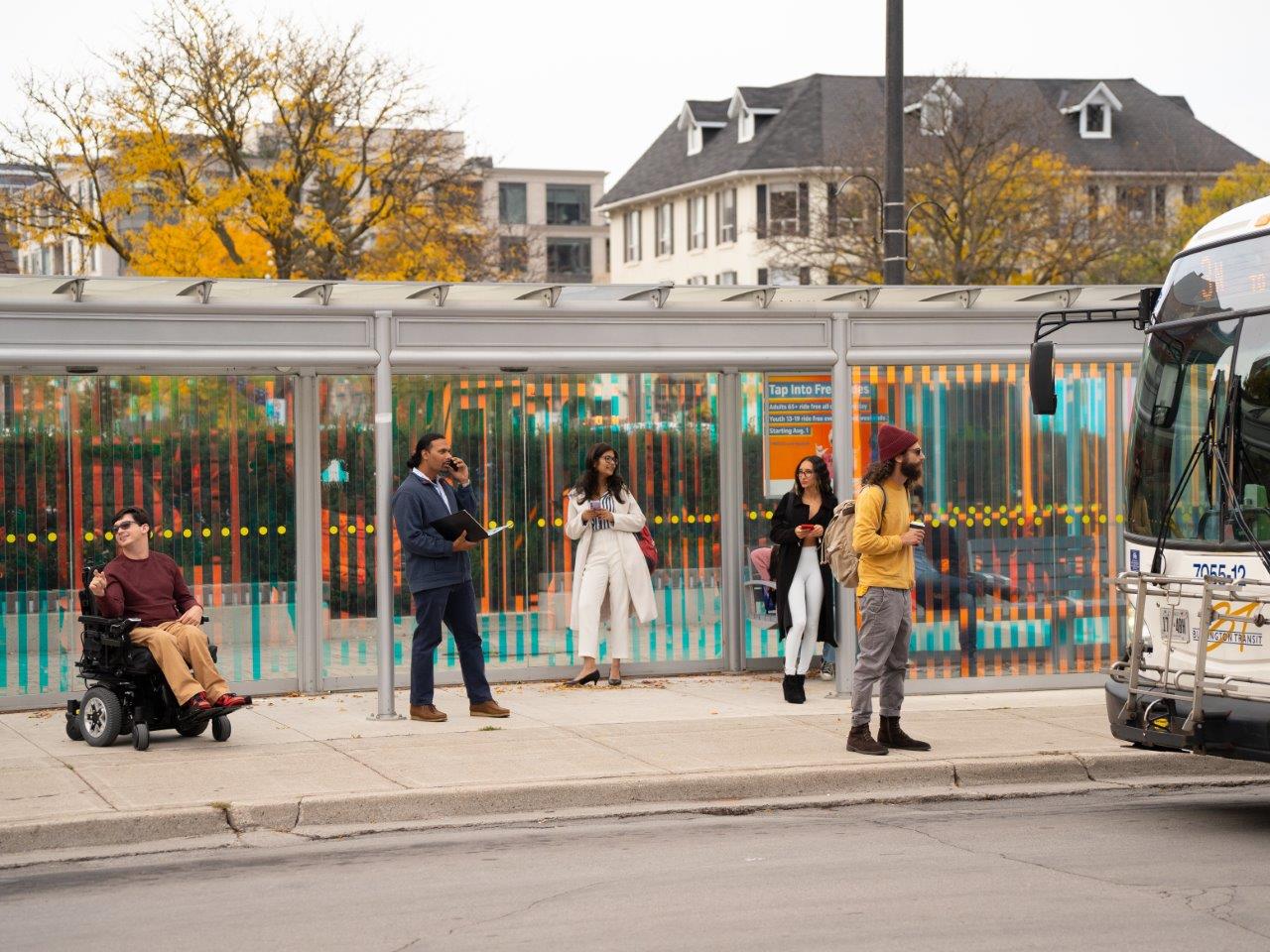
Public transit offers a wide range of benefits that can improve the lives of individuals and communities. It is a cost-effective alternative option to driving, helping to reduce traffic congestion and air pollution. Getting more people to use public transit instead of driving alone will help reduce local air pollution.
Theme 3: Local Economy (2 Actions)
Climate change reduction efforts, such as investing in green technologies and infrastructure can stimulate economic growth, innovation, and job creation. Energy efficiency programs and environmentally sustainable business practices can save businesses money and improve their competitiveness. There is an opportunity for the City of Burlington to become a leader in the green economy and support local businesses through their decarbonization transition.
What We Heard: Community Engagement
A community engagement strategy was developed as part of the plan update and included 22 engagement opportunities for residents to share their priorities for climate action and feedback on the proposed action items for the updated plan.
Promotion of community engagement opportunities was completed through TakeActionBurlington.ca, GetInvolvedBurlington.ca, City social media channels, City Councillor and Mayor newsletters, and community stakeholder partners and networks including Burlington Public Library, BurlingtonGreen and the Bay Area Climate Change Council.
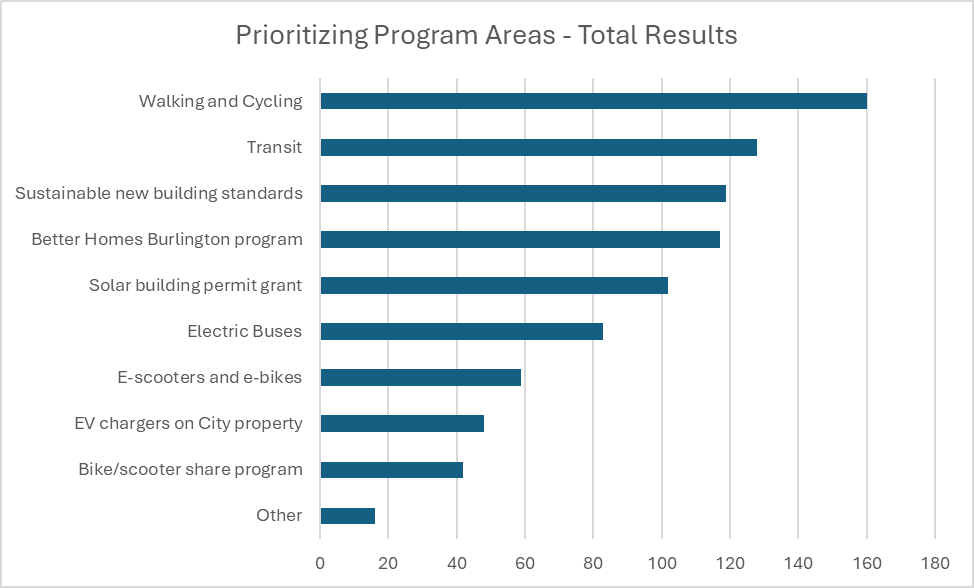
Some key messages that staff received during the engagement sessions were to focus the actions, make them resonate with the public, simplify wording and look to community and neighbourhood connections to help implement the plan. A total of 403 residents participated in the community engagement opportunities.
You can find the full community engagement report on Get Involved Burlington, which provides a summary of the results, feedback received from residents, and staff responses.
Climate Implications
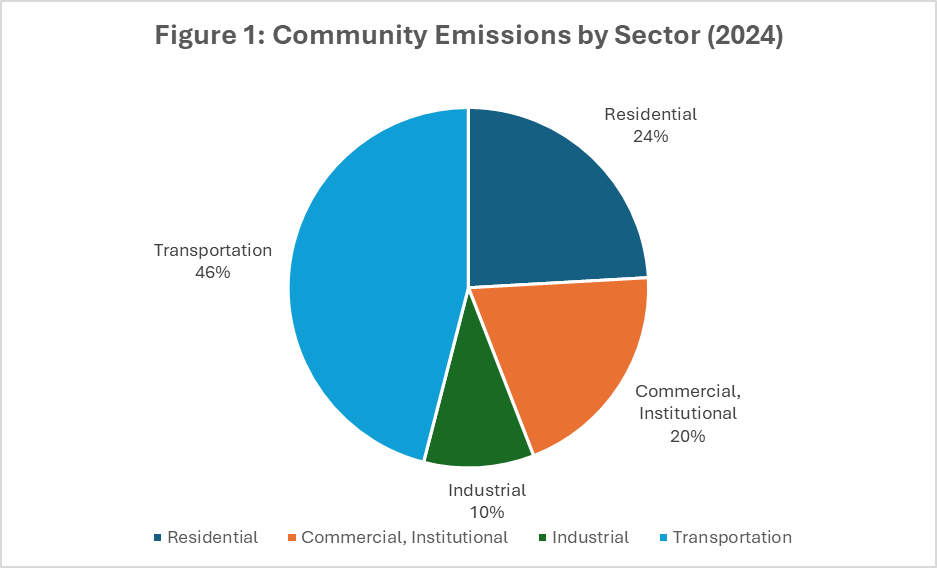
The Burlington Climate Plan is a guide to help our community use less carbon-heavy fuels like natural gas and gasoline. This will cut the greenhouse gases that cause climate change. The plan focuses on buildings and transportation because they create most of our local emissions.
The actions in this plan represent the City’s ability through programs, legislative authority and capital investments to work towards the target to be a net carbon neutral community. The City cannot achieve the target without support from other levels of government, community partners, the business community and individual residents.
Take Action Burlington! We need to work together to meet our carbon neutral goal. Collectively, we can make a difference.
This post was updated in March 2026, after the Burlington Climate Action Plan was approved by Council
 Take Action Burlington
Will there be a focus on green roofs on new building or on municipal facilities? Toronto already has a mandate and I think Burlington should follow suit. There is a lot of “empty space” up there that could be retrofitted which would reduce their heating and cooling costs.
LikeLike
Recent decisions by the province through Bills 17 and 56 have restricted municipalities’ ability to adopt Green Development Standards and Green Roof By-laws that implement mandatory building design standards beyond those required by the Ontario Building Code (OBC). As such, mandatory standards addressing sustainability of buildings in private development applications cannot be introduced or implemented unless they comply with the OBC; this will have implications for how the City may improve or revise current standards and guidelines.
LikeLike